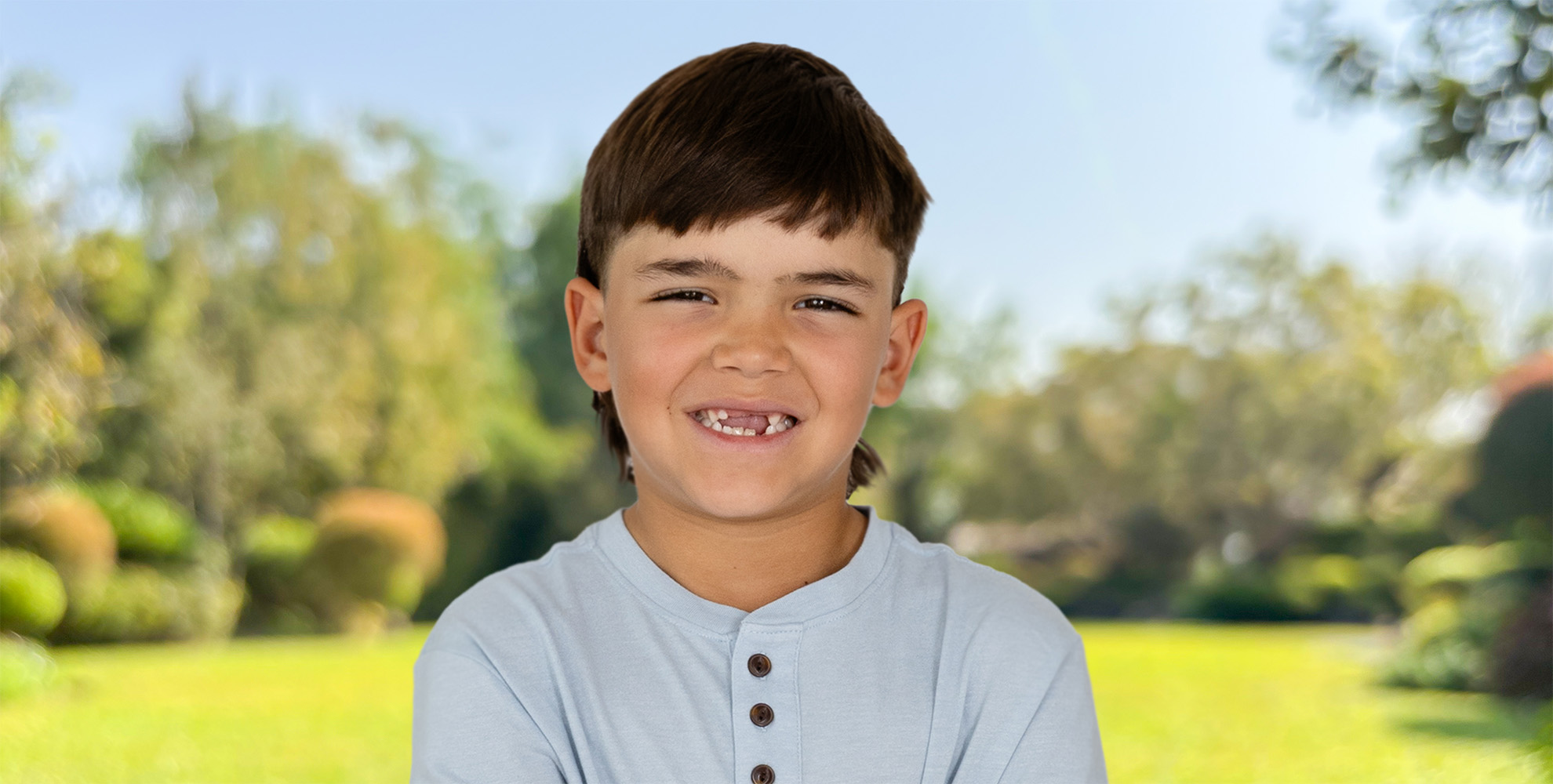
A Rare Tumor, Expert Care, and a Remarkable Recovery
Newborn Micah’s parents were alarmed when he began projectile vomiting at 2 weeks old. Pediatricians thought it might be a food allergy, but symptoms continued despite changes to his and his mom’s diets. When Micah became lethargic and spiked a fever of 104 at 10 weeks old, he was rushed to Rady Children’s Emergency Department.
An ultrasound and CT scan revealed a tumor in the tiny infant’s stomach. Micah’s specialized care team told his parents he would need to undergo a surgical biopsy to determine if it was cancer.
In addition to many unknowns as to what would come next, the family faced the difficult challenge of keeping their baby from eating in preparation for the procedure. “Our poor little guy was hungry,” recalls Micah’s mom, Maria. “I’ll never forget one nurse who saw how exhausted we were and offered to take Micah in his stroller to soothe him while we got some rest. Her compassion meant everything.”
After an hours-long surgery, the large tumor was successfully removed along with 40% of Micah’s stomach. Thankfully, the tumor wasn’t attached to any other organs or lymph nodes. A week later, biopsy results delivered greater news: benign. The mass turned out to be a gastric immature teratoma, formed from embryonic tissue.
Micah and his family stayed at Rady Children’s for two weeks as he recovered, relying on a feeding tube to allow his stomach to heal.
“Those days were incredibly emotional,” says Maria. “The nurses were wonderful—one even hugged me when she saw me crying—and Child Life gave Micah a musical sound machine with lights and sea creatures. He loved it.”
Micah’s tumor was donated to St. Jude’s and his case later published as a study in hopes of helping others. His follow-up care at Rady Children’s carried on until he was fully cleared at 5-and-a-half years old. He is now off all medications and thriving.
“Rady Children’s Hospital will forever hold a special place in our hearts,” says Maria. “The staff’s compassion, skill and dedication carried us through the hardest experience of our lives. We are endlessly grateful for their care.”